Brokenness is the secret sauce of compassion

I never quite understood why I am the one doing the things I’m doing.

Yes, I’m typically secretly insecure, conveniently hiding under a layer of, “Of course I can do this and it makes sense and why not? Don’t challenge me.”

More often than not I’ve just tried to ignore and be louder than the suspicious soul voices: “Really? You’re hanging out with homeless guys, prostituted women, survivors of trafficking, recovering addicts, and abused children? Are you serious? You have no idea what they’ve gone through. You’re only naive and condescending. Who do you think you are, some sort of ‘help’?”

Yeah, it’s a slippery slope. Once you begin basing your value on your experiences, those thoughts will remove you from giving and will eventually descend into every other relationship and friendship until one day you’ve completely talked yourself out of being worth anything to anyone.

I’ve fought against giving in to it. Over and over. I didn’t always know why, though. But something in me knew that if I didn’t want others to judge me based on my externals than I couldn’t ever let that filter exist in my life.

But recently I’ve realized that the connection which leads to my compassion comes from a place where shared experiences are completely unnecessary.

If compassion comes from connection, where did that connection come from?

I’ve tried to figure out where everything changed and I started having deeper connection. I had a major spiritual encounter about 5 years ago that challenged my little world and narrow perspective. I knew at that point that I would be seeking out broken people, as I then called them.

Soon enough it wasn’t me going to them anymore; it was them coming to me. Or “random” encounters. Or perhaps just the law of attraction?

At this point it turned into something different, something unexpected. Though I had grown up in churches that did ministries for broken people, it literally offended me when my pastor once asked me, “So how’s your ministry going?” and another couple saying, “You must be really courageous.” I didn’t know why I wanted to react, but part of me wanted to retort, “It’s good – how’s your ministry going?” and “So why aren’t you courageous?” and “This isn’t my ministry; it’s my life and I’m simply friends with the people in my life who happen to be different from me. Why is that a special ministry??”

But I never said that because, obviously, it seemed a little unfair to some well-meaning people. And in its own vein self-righteous.

Yet I still couldn’t figure out why others saw my life as unusual or courageous when I particularly didn’t.

In the past 5 years my friend group has included homeless men and homeschooled guys. Drunks and preachers. Business owners and drug addicts. Strippers and homosexuals. Prostitutes and counsellors. Immigrants and high-end escorts. Missionaries and convicts. Muslims and foreigners. A lot of them I opened my home to or just shared life in general with them.

But I seriously cringe when I just list off categories like that, that somehow we can encapsulate an entire person into one singular label. We are not defined by our life season, our country, our societal culture, or our past record.

Additionally, we are never defined by our worst day or worst choice or worst circumstance.

So when others question my choices, or I question myself, I go back to where it began for me, which was something like, “Wow, you are the kind of person I would like to get to know,” and then as time developed with certain people, specific areas of brokenness surfaced, and that naturally led to opportunities to share life and help out as needed.

Some of those issues became trends. And I found those trends already had a name: social justice.

Then I realized why the so-called “broken culture” was especially drawing to me.

It’s not because they have some extreme external circumstance and it’s “shocking” and I want in on that so I can use their stories to make my life more interesting.

No, that would actually be exploitation of another face.

What I found instead was a common brokenness.

And broken people are attracted to broken people.

It long stopped being “they are broken” and it became “we are broken.”

For so long in my life I didn’t allow myself to be broken because I was ashamed of any internal brokenness or weakness, and for me not being strong was the most vulnerable and threatening place to be (and yes, still is).  So I created a really safe, protected life that never challenged my strength, which was, ironically, my greatest weakness. I was so afraid of being ashamed, of being vulnerable, that I created walls that kept me safe and everyone else out. It worked out pretty well for a long time.

That wall started to crumble when I went through my own depression and rejection which led me to actually feel and process emotions, and that experience caused me to recognize others with those same emotions around me. It’s like I had this new rejection radar and I’d see someone and be like, “You got it too!”

This wasn’t about me fixing them. But it was about us sharing something.

And that’s all, folks.

We don’t need to look for shared experiences or commonalities to find connection. We can simply look for shared brokenness, which is actually shared humanity.

And sharing brokenness transcends all barriers: societal, cultural, denominational, racial… all of that other stuff falls below the reality that we are sharing something much bigger, something much stronger than just “we look alike, believe the same thing, have a similar past, have the same struggles, and grew up in the same place.”

People are not projects and each one has incredible dignity, no matter how much their lives don’t make sense to us.

I’m finding that the ones that have the hardest time relating to others vastly different from themselves are the ones who won’t allow themselves to be broken. Oh, we all have it. It’s all there. It’s just that some people have had to deal with it in the wide open (your “societal broken” ones), and some have then allowed the struggle to make them stronger while still embracing the weakness of their continual brokenness.

Others, however, perhaps never had to fight external pressures and live on the edge of survival. Like me for so long, it created this false sense of self-reliance, that I can do anything, that I can fix myself, that there’s not really much wrong with me, that I’m above the struggle, and everyone needs to settle down about “justice” issues all around us.

Because when we have no awareness of our brokenness, we have no capacity for caring. Our compassion is only as deep as our brokenness.

And brokenness is the secret sauce of compassion.
Brokenness

A friend asked me not too long ago, “How do you get to the place of really caring about people, especially people who have hard lives I really don’t and can’t understand?” It kind of surprised me, though I appreciated her honestly, and I stumbled for words. “I guess, you know, uh, you just have to go through it. Just like they are. Like, you gotta feel that pain, the same kind they feel.”

It took some pretty difficult experiences for me to recognize my own brokenness, but now I wouldn’t change it for the world. I feel like I’ve never felt before. Don’t get me wrong – it’s often not really good, like, I don’t sit around thinking, “Boy, this anguish is incredible. Two. Thumbs. UP!”

No, I just feel things really deeply. And sometimes I do something about it, but sometimes it’s just real to feel. To know that some place inside of me still cares, even if it’s anger and bitterness or hope and joy. It’s all part of the process of letting go of strong-enough and embracing the this-burns-right-now brokenness.

At first I thought this post would be about social justice and not trying to create narratives that certain broken lives mean more than other broken lives, that just because we don’t understand someone’s brokenness doesn’t mean that we can withhold mercy.

But … maybe this is a word about that.

Maybe we can’t separate a fight for justice from the hand of mercy coming from a broken heart of compassion.

Maybe what we need is a lot more of is just mercy.

Where’s your brokenness?

If you can’t find it, then you may just be unaware of it. And you may want to investigate reactions of anger, wanting to control conversations, make sure you are right, and a desire to “do away” with certain people and causes (holla at your girl – been there, done that).

Stepping back and opening up like that will do scary things to you. But soon the things you were so scared of will be forgotten in light of the wonderful people you connect with, people who, by all societal means, you should not be spending your time with. Fear will assault you, as you will hear lingering voices, “Who do you think you are for thinking you have anything to contribute to this person?” Believe me, I live with those voices. But it takes a humble attitude of being needy and broken each day to make it through.

Look for those uncomfortable places. For me it’s been connecting with people and cultures that are way outside of my “experience” realm. I can’t say that I “get it” but I can say I know how it feels to be human (broken), so I can share life with them and feel deeply with them and about them.

When you’re at that place, you’ll be moved to do things most people won’t understand. But that’s OK. I dare you to love too deeply, risk too extravagantly, give too recklessly, and feel too much. It may not be a path that is clear and you may be afraid of what people will think, but the reward is fully alive and well worth each investment.

Abortion: Are We Actually Pursuing Justice Or Only Condemnation?

As an open advocate of human rights, I absolutely stand in the gap for the babies that have been unjustly called fetuses when they are totally human, that some people see their organs as a means of gain when a real breathing human could have had those organs and went on to live a very productive life.

DeathtoStock_NotStock5However, to only cry out for babies rights and not for women’s rights or fight detrimental socioeconomic issues is very short-sighted.

I think it’s much easier to virtually stand against a “black and white” issue than to step into messy situations and complicated lives that set the stage for something like abortion to exist.

But let me back up first, before I throw my opinions and thoughts out there.

Because I know behind every issue is a story. A person. A face.

I want to be sensitive to friends, to women, who have had abortions.

To some, it was through a very difficult situation and to see your FB feed covered with abortion videos is to re-live terrible pain and trauma that many of your friends will never understand.

To you, friends, I have absolutely no judgement or shame to throw on you. You are, and always will be, accepted and loved.

It’s not a line that you may have heard before. Perhaps right now you only feel the weight of judgment and hurt. Perhaps you don’t know what you feel. But either way you know that to openly talk about it with your conservative friends would be to open yourself as a live target.

Let me assure you that Satan wants you to live under that lie, that you only have worth if you hide this part of your life from prying eyes.

No matter what anyone else says, you have no guilt, no fear, no shame under the blood of Jesus. He loves you no matter what you think of yourself or what other people think of you.

To everyone else, my friends, do you actually know someone who has had an abortion?

If not, that’s interesting because twenty-one percent of pregnancies in the United States end in abortion, according to the Guttmacher Institute*.

Outside of what the media says, do you know what issues set the stage for women to pursue abortion as the only viable option? Or do you just assume that it’s only people who don’t like children and are irresponsible?

Have you only listened to the 5 o’clock news, or have you sat down and humbly listened to the story of someone who has had an abortion to learn about what led them to that decision?

Do you think that there has ever been oppression, abuse, or deception surrounding some women at the time of their abortion?

Have you ever considered poverty or socioeconomic issues as a potential root?

How have you been a part of the solution to help women in desperate situations?

Do you so fiercely condemn people involved with abortion that you shut a door to hear your friend’s voice who would like to have someone listen to her story?

I don’t have the answers to all these questions, but I want to be sensitive to all lives and all stories, both babies and women, doing what I can to practically pursue justice, to love kindness, and to walk humbly with my God.

*Here’s an interesting article– it seems to have some solid research. http://www.vox.com/a/abortion-decision-statistics-opinions

How To Be A Mom Of Justice: Fighting Human Trafficking While Juggling Tiny Humans

Growing up in a family with 5 other siblings, justice was all about me getting the same amount of cookies as my brothers.

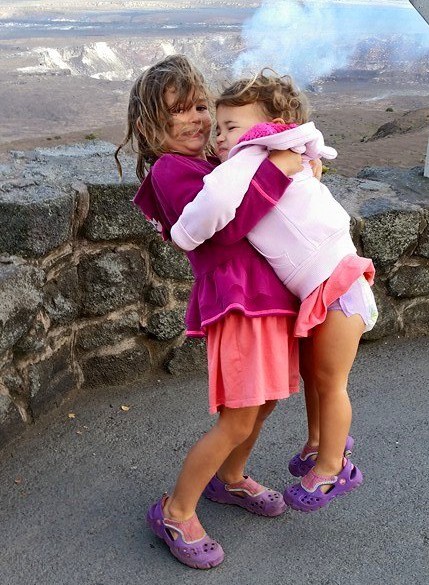
girls

Some of my favorite tiny humans

Lord help us all if one child got more pieces of candy than the others. For my parents, I’m sure managing “justice” was a full-time job. We were extremely vocal is there was even a hint of unfairness in the distribution of sweet goods.

So for parents to think about stepping in the world of social justice can seem daunting. Managing the demands and schedules of tiny humans who at times believe the world revolves completely around them and their Fisher Price toys is a very demanding task.

However.

It is possible.

It is possible to do justice,

to love kindness,

and to walk humbly with your God.

It is possible to raise a generation that is aware of children, women and men that are enslaved in sexual exploitation.

It is possible to create a force of world changers who don’t just care, but also act.

group

Example of an awesome mom juggling tiny humans! Shout-out to my sister-in-law Kristin

And this doesn’t happen on accident.

This is a word for moms. The mom that can’t imagine adding one more thing to her plate. The mom who can hardly get her child to share her Barbies with the neighbors. The mom who is overwhelmed with getting from one meal and one nap to the next.

Your life and your role is unspeakably important.

And I’d like to introduce a grain of thought that you can live for justice actively with your kids.

But it may look different from the way I live. In fact, it will look different from mine. I’m in a totally different season of life. Your ways will look different, but your impact will also be different, and perhaps greater. In having children, your impact opportunity is exponential. Think of that! It’s not all about how much you accomplish; it’s about multiplying your compassion many times over in your children’s lives.

That’s the kind of math we need in this world.

Moms (and Dads, of course), here’s some things to think about as you approach living an active life seeking justice in your community.

You are not separate from your family.

Whatever you choose to do, do it with your family, with your children. Teach your children about these realities. Don’t hide the realities of human trafficking from them.

Research child trafficking. Read. Watch. Become aware.

Become aware of the realities of child trafficking and prostitution in America and in your very city.

Missing child or runaway report? That child will most likely end up in child prostitution or some form of sexual exploitation.

Foster care and social services? Most of them have gone through some sort of trauma, many of them from sexual and/or physical abuse and are at risk to traffickers and pimps.

As a mother, as a parent, you will have an understanding and anger inside of you that is more direct and empathizing than those without children.

But don’t pursue this out of guilt or revenge; pursue it because you know love and justice are two sides of the same coin.

Allow your heart to melt. Your actions will naturally follow as an overflow of your heart.

And then share with your children. Appropriately, of course, but you can be a good judge of how much they can process at what age.

But whatever you do, don’t hide them from it. Because otherwise we will one day have a generation of sincerely ignorant and insensitive adults who turn their gaze away from really uncomfortable realities that they could actually have an impact in.

Ask your kids what they think you as a family should do to help.

You may be surprised at the amount of creativity and generosity that your kids have. Why not ask and see what they come up with?

This is also about empowerment. If someone feels like they are contributing to a solution, then they will begin to own it for themselves.

Release control of your “perfect house.” Bring broken people in to mess up your perfection.

I’ve noticed an interesting culture of the “perfect-organic-range-free-germ-free home.” The kids can only eat perfectly wholesome food, this is where everything “goes,” schedules cannot be tampered with, and life in general revolves around the total interests of the kids.

And believe me, I know kids thrive and grow under healthy, consistent structure. And, please, someone give them regular naps!

But still, I think there needs to be a safe place where imperfect people can walk in as imperfect and feel accepted.

What if someone “dirty” comes into your home? Will your kids (or you) reject them because they don’t fit into the system?

What if you had a schedule that showed your kids that helping others is more important than playing video games?

What if it was all about “This is simply how we live as a family” instead of “Geez, this is another thing we have to add on top of our already crazy schedule?

For instance…

Our whole family participates in yearly 5k’s to raise awareness about human trafficking.

We go to a local orphanage every Tuesday at 4:00pm and give them cookies we made.

We bring a few kids over from local social services once a week for family game night in our living room.

Every time we give our children allowance, we require that they give 10% of it to raise money to the local safe house for formerly-trafficked girls.

A few more ideas come to mind…

Choose a country that is under the blight of poverty, violence and trafficking. Pray once a week as a family for that country and do research so you can talk about it with knowledge and understanding.

Find an organization that is doing sustainable work in that country, build a relationship, get real names to pray for, and send handmade notes and cards to the ones in the recovery shelters.

Save up and take a vacation as a family to that place as a missions trip.

Overall, it’s about being intentional, being purposeful with your life.

Don’t let life control your life. Teach by example that we can make decisions about what our life practically looks like. We’re not victims of our circumstances or appointments.

If it’s simply a part of your life and values, then you don’t have to worry about “not doing enough” or having to carve out extra time.

But remember, at the end of the day, you are raising a generation of world changers…

So don’t discount the impact you are making to the world by simply being a faithful mom.

We become what we look at. So if your children are spending 18 years of their lives watching your virtues of faithfulness, love, justice, kindness, and generosity, will they not become that themselves?

Start with who you are. Take care of you. Take inventory of your soul.

And then live out loud.

I can’t think of a better way to be a mom of justice than that.

*****

Want to learn about human trafficking and exploitation in America and the world? These are my personal resources.

Here are some the most helpful organizations that I follow on Facebook and use for learning:

Not For Sale

Exodus Cry

International Justice Mission

A21 Campaign

The Abolitionist Movement

Here are organizations that sell really beautiful products that are either made by survivors of trafficking or support them:

WAR Chest Boutique– International free-trade products made by women survivors of trafficking

Bought Beautifully– International free-trade products that support survivors of exploitation

Starfish Project– fair-trade jewelry that employs previously trafficked women in Asia

Colette Sol USA– handmade women’s shoes to fight human trafficking

Cozzee– fair-trade coffee supporting survivors of trafficking

Conferences you seriously need to check out or see if you can stream:

The Justice Conference– Chicago, IL

Abolition Summit– Kansas City, MO

Global Prayer Gathering– Washington, D.C.

Books that have impacted my life and moved me to action:

God in a Brothel– by Daniel Walker. Stories of an undercover investigator’s experiences in saving women and children from sex trafficking around the world.

Possible by Stephan Bauman. A call to reconsider what it means to sustainably impact our neighborhoods, villages, and cities.

Amazing Grace by Eric Metaxas. The story of the remarkable life of the British abolitionist William Wilberforce.

Films that nailed it in showing the realities of trafficking:

Nefarious: Merchant of Souls– award winning documentary on the global sex trade

Demand– documentary that is produced by Shared Hope International and focuses on demand factors for sex trafficking

Dispatches from the Front: Islands on the Edge– documentary highlighting the realities of human trafficking in Southeast Asia

Broken, But Not Destroyed

I’ve been here one year, one whole year since moving to Chicago and totally starting over.

I came with a lot of hope, but inwardly carrying so much pain. So much pain from a betraying relationship in my personal life, and a verbally abusive power in my work life.

But even in my walk of hope into the future, in hopes away from the past, I had no idea the amount of resistance I was about to face.

You see, previously at one point in all my hope as I left to start a new season in my life, I thought I could do anything, accomplish whatever I set my heart on.

But instead of encouragement, I faced the betraying, abusive voices: “Who do you think you are?? What do you think you’re trying to do? You are nothing. You are completely unvaluable.”

The people of power and influence in my life had bullied my spirit almost into the ground.

I feel like I’ve lived with the humiliation of my hopes being dashed, and ashamed I was ashamed.

And yet– how can I say this– I knew.

I knew that I was supposed to step into a role of helping businesses be successful. I knew it was also time to partner with non-profits to build sustainable business models for them to help provide work opportunities for trafficked and abused women, to teach these beautiful women that they are more than their bodies, that they are full of potential and skills and opportunities within business.

This kind of work, this kind of “helping businesses” is otherwise known as consulting. And I thought this was it, this was my calling.

But the oppressive cloud hung over my head all year, and I couldn’t get the ridiculing, scoffing voices out.

“Who do you think you are? A consultant??”

At times this past year I have felt that all was lost.

I have had total meltdowns more than I care to recall.

I have felt like I’ve been on the verge of complete disaster continually.

I have faced very real injustice, betrayal, and brutal insensitivity.

I wanted to walk away. But I didn’t quit. I couldn’t quit— how can I explain it? I knew that I knew I was supposed to pursue this calling.

For so long I knew that God’s love was for me, and I was down with that. But I really didn’t think his justice applied to me.

Oh, but little did I realize that justice is love in action.

It’s really powerful love giving really powerful purpose. It’s hope wrapped in a gift.

It’s real. It’s received.

So.

Here it is. A kind way God has worked justice for me.

Today I started a job as a small business consultant for a reputable consulting firm in Chicago.

Who… me??

How was I to know that they would need a consultant that specializes in marketing and non-profits, which are both my favorites and my passions.

And folks, that’s when I knew that the only voice that matters is the one that created me.

Others can point and scoff and even in pious judgment say to God, “Who does she think she is??”

And he simply smiles and answers, “The best. The most awesome. The biggest world changer. You see, she’s with me.”

It brings to me to tears, that it all had a purpose, that following a very small seed of struggling faith was much bigger than any other opposition.

Sometimes it takes being broken to realize that you can’t be destroyed.

Broken

Thank God I’m Not Like Josh Duggar

Dear God, thank you that I am not like Josh Duggar.

You and I both know that their strict, conservatism was a huge front to the realities of his and his family’s life.

He is now exposed for what he really is: a sinner.

A sinner living like he’s something righteous.

Well, God thank you that I am not like this hypocritical, self-righteous sinner. Not only would I never commit an act like that, but I would never be so religious and fake. I am the most un-fake person I know and can make pure judgments of others’ sincerity.

I hope that by me standing up for what’s right and shaming him and this fake Christian culture that you would be proud of me, that I am encouraging all people everywhere to be real and transparent. Since the Gospel cuts through truth and lies, I am so thankful that I can minister the Gospel by heaping shame on him and his family, because shame is what leads anyone to change.

It’s what he deserves. I hate people like that, judgmental people that act like they’re better than everyone else. At least I don’t act like I’m perfect. And because I don’t pretend like I’m perfect, then I have a right to announce all the hypocrisy of those who do pretend, even if I don’t know them. I can tell; I know these situations. I’m a really good judge of intent and character.

So God, I thank you I am not like this sinner, Josh Duggar. Thank you for all of your grace to me. It makes my life so much better. I’m glad I can receive it, unlike other sinners. In your name, Amen.

*******

It’s such an easy trap to fall into, the trap of merciless shame-dumping: The Judgement Zone.

I know this Judgment Zone because it’s my gut reaction to situations like this one, when really bad things happen to the vulnerable ones by people who claim to be “good.” I hear these very words in my head and start boiling with anger.

But here’s what I’ve realized about this Judgment Zone: when we live in the Judgment Zone and rally around sin to expose it, no matter how big or how little, here’s what we’re really preaching:

“No one is ever allowed to mess up. If you want to be included or wanted, you have to be perfect. Or at least my definition of perfect.”

And we put more and more distance between ourselves and our relationships and our community.

We hold up the banner of Josh Duggar’s mess and shout, “He must be punished! And he must be extra shamed because he was faking! And it’s our duty to exploit it, to make sure that everything is clear and ends up being perfectly fair.”

Because he is the only one that’s ever messed up or pretended that he was something he wasn’t.

Because he is too far gone to be shown mercy and grace.

Because he’s tearing down the name of goodness and God in our culture.

Actually what’s tearing down the fame of God in our culture is a total lack of love. We should be known for what we are for, not for what we are against. We should be known for our encouraging lives, not for our exploiting voices.

I am just as appalled at evil and injustice as you are. I’ve seen it up front and personal. When my friend was beaten and abused by her boyfriend for months and she escaped to my house. When my friend was raped and the courts wouldn’t believe her and the perpetrator goes free. When I lost all my work when my previous company took unjust legal action against me.

JusticeIt’s not cool. It shouldn’t go undone.

I absolutely want justice.

But justice without love, without hope, and without purpose is no justice at all. 

We all applaud turn-around stories of people who were living destructive lives and then have a major “come-to-Jesus” encounter where they do a 180 and totally change for good.

We feel good when we hear stories like that.

But who will stand in the gap for them? 

Who will be the first to say, “I forgive you. I want the best for your life. I offer you a safe place to be imperfect and go through your change”?

Jesus is such a good example of this. He’s the one who sought out the dirtiest, most rotten ones of society and said, “Follow me. Let me serve you. I make all things new.”

So now we can also can look at the ones with the most exposed, dirtiest deeds and say, “Come be with me. Let me serve you. We’re going to go with Christ and he makes all things new.”

This is for the broken ones. Rich or poor. Popular or outcast. Perpetrator or exploited.

When we live less than this, when we become judgmental of the judgmental, we raise walls of separation.

And those observing from the sidelines who need help are cowered into silence because if anyone knew what was really going on in their lives, they know they would be shamed and bullied into the dust just like this guy was.

So they live in quiet conflict, their secret lives sealed shut beneath the surface.

But we can only go so long before the reality of our issues come out. And I believe that a culture of authenticity and grace-covering imperfection can help all of us heal of stewing internal struggles.

I want 14 year old boys who struggle with pornography, sex addiction and an unhealthy view of women to know that there is a place and a people where they can go and open up about their imperfections and find loving help.

I want 40 year old crack-addicted prostitutes to know that there are people who love them and see them as the valuable, cherished women that they are and are willing to walk with them into healing.

I want the cheating husband with 3 kids to know that he doesn’t have to live a fake life anymore, that there is a place where he can come in his brokenness to find forgiveness and restoration.

This is called radical grace. 

Because sometimes some things seem completely unforgivable. It would just be too radical.

But to the broken ones, to the ones that see their helpless state, this radical grace is freely offered.

And we are the agents and communicators of that grace in our relationships and communities.

And if that abuser, that pimp, that cheater isn’t broken yet? Well, it’s not our place to shame and break them.

We make boundaries in our lives, we pursue proper justice through our legal system, but we don’t light shame fires.

Shame never induces change.

But mercy does.

How do I know this?

Because I am the one who has received this kind of radical grace and unbelievable mercy.

And if I can’t give back what I have received, did I ever truly receive it in the first place?