Eyes wide open and totally blind: what do we do when we wear human slavery?

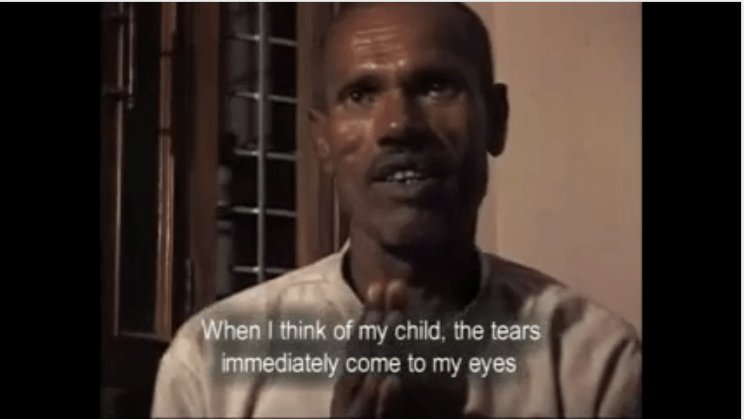
“I couldn’t find my son.”

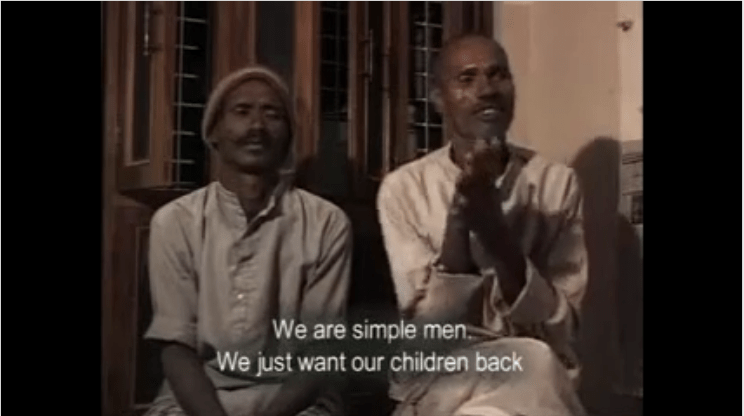
The father, crouched down and half-sitting in what looked like an incredibly uncomfortable position, spoke in a long-burning anguish.

3 years earlier he had lost his little boy.

The son had been playing outside the last time his mother saw him. Next thing she knew, he disappeared. No trace, no sign. His father, away at work, came home immediately to begin searching frantically.

The area, the woods, the neighbors, the nearby villages — none of them had seen his son.

Days turned into months that stretched into years.

“I felt like I was going mad. My wife seemed to be going mad as well. We couldn’t find him anywhere.”

The camera began panning the area, their home village in western India, showing the depth of poverty and the obvious the lack of food and clothing.

Yet even so, their dignity is loud and clear, despite being so poor. They understand that not everything that costs money brings happiness.

They know what’s valuable — the value of their sons and daughters.

The one thing they hold near and dear costs no money and is really their most prized possession — their children. Birthed in love, living testimonies of their own lives. That is the real treasure they carry.

Yet how cruel that these possessions that are the center of their worlds are live targets. Targets by those who live for greed and exploitation for their own gains.

No, it’s not the money, not the beans, not the farm animals they want.

That son. That’s who the slave traders want.

Humans, unlike drugs or other material possessions, can be bought, sold and used many times over the course of a lifetime.

If you want to have a financially successful career, human slavery is the most ludicrous industry yet.

This boy, one of the 27 million, lost his life and freedom and became one of those numbers. Stolen away and transported on a two-day journey south of their village in India, he was enslaved in the Indian carpet belt where 16 millions pounds of carpets go to the UK alone every year.

And he was only 6 years old.

To some, that age means he is vulnerable and meant to be cared for and protected.

To others, that age means he is an opportunity for many more years of gain and wealth.
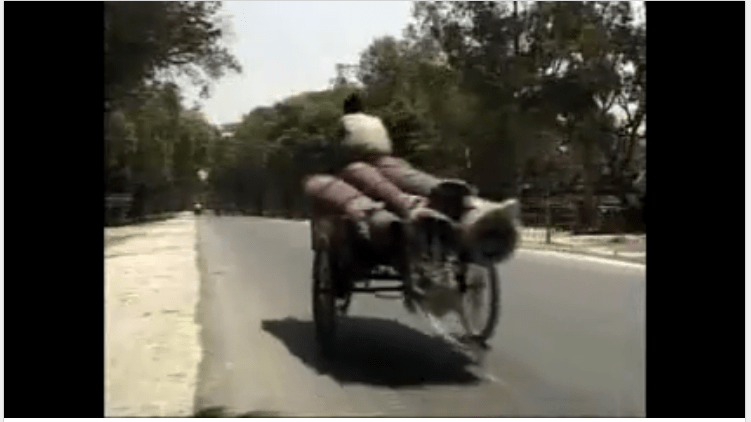
Screen Shot 2016-06-15 at 8.21.55 PM

What is slavery?

In this documentary, Slavery: A Global Investigation, they described slavery as being “locked away, held against their will, and enforced by violence.”

And in this specific region where this boy was kidnapped, there are over 4000-5000 children missing.

5000 stories.

5000 parents on the verge of madness out of grief.

5000 innocent eyes.

5000 little creative hands.

Slavery targets the poor.

Why? Because nobody cares.

Typically, only the poor care for each other. And yet they can’t afford to act on all the care they carry and find resources to ensure justice for their lives.

Nobody in the city or world scene would notice if they’re gone.

It should not be surprising when silent voices are silenced.

Exploitation is simply silencing voices until they are no more.

Silence though is perspective. The poor already have voices — and real, valuable ones. Perhaps we say, “I never heard them!” And Jesus says, “Don’t be surprised — the poor you will always have with you. Listen to them.”

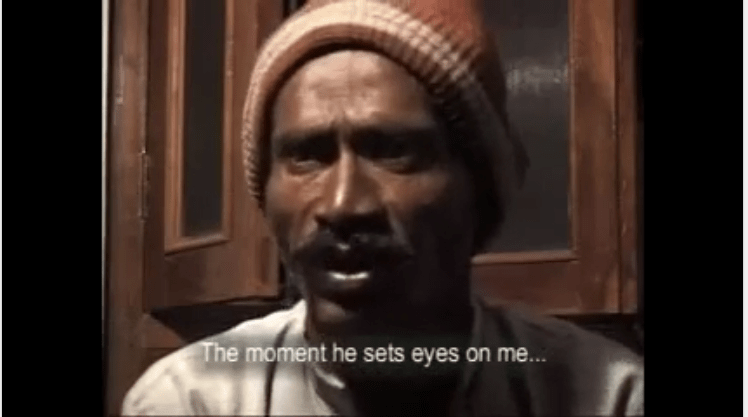
Screen Shot 2016-06-15 at 8.25.50 PM

Screen Shot 2016-06-15 at 8.27.07 PM

Screen Shot 2016-06-15 at 8.27.23 PM

What slavery looks like

I watched in awe at the awful revelations. Children tied to carpet looms. Forced to work for 14 hours a day. Beaten for slowing down or speaking up. Never allowed to leave the building. They had to urinate from the rooftop.
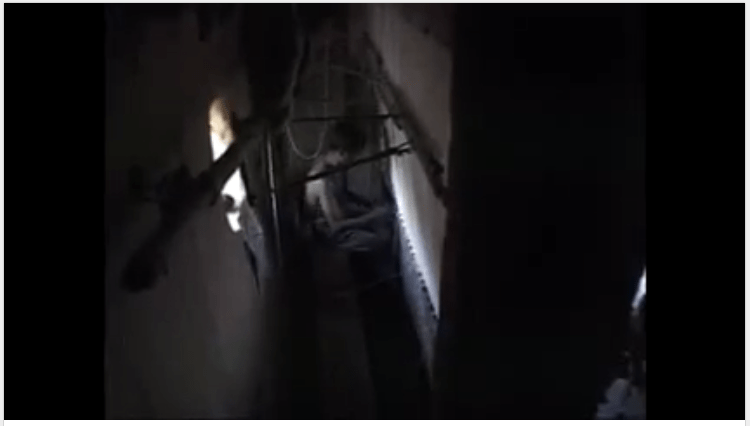
Screen Shot 2016-06-15 at 8.22.52 PM

And they are beautiful rugs, for sure. Perhaps like this one:
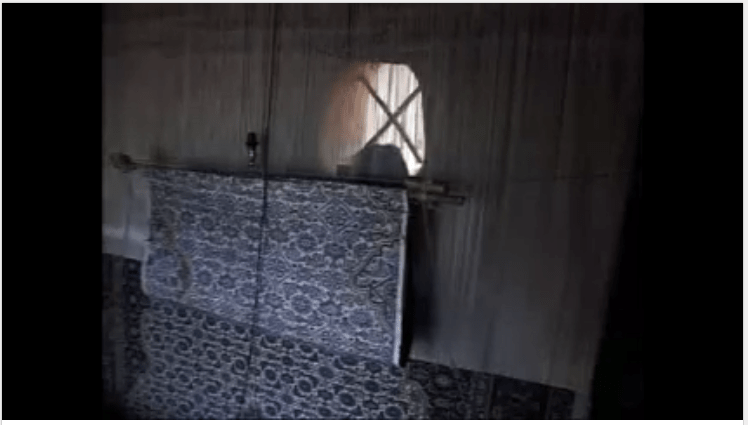
Screen Shot 2016-06-15 at 8.23.03 PM

Of course slave markets don’t make shoddy products. If they did there wouldn’t be any demand for them. No, slave-made products camouflage very well into the world market.

Beautiful but silent.

And that rug — I was planning on buying one like it. A few months ago I was in the middle of fixing up my house, finally buying real furniture. And I could consider myself a thoughtful consumer! I do research, I compare prices, I’m not (that much) compulsive. When I found a rug I really really wanted, I was in the “let me think for a long time before making any impulsive decisions” state.

And it was attractive to me because, well, rugs are expensive and this was one relatively affordable. Geez, for anything decent it seems like you had to pay an arm and a leg.

Until I realized that some do pay an arm and leg.
Screen Shot 2016-06-15 at 8.27.49 PM

Screen Shot 2016-06-15 at 8.28.11 PM

A few days later I walked away from the film, enlightened but trying oh-so-hard to resist. But I really need this rug! I can’t afford a “socially responsible” rug.

I looked up the specs. My rug was made in India. Then I would see this boy’s face, the dirty floor in the loom room where he worked, the 3 years of life he lost in order to make my floor for the next several years attractive.

I had to find out.

Maybe my rug was good to go. But I wanted to at least try to find out. So I contacted people. I contacted Wayfair, a company I have purchased from before and who had claims to my desired rug. I had no idea how and if they would respond, but this is what I wrote:

Good morning, I have recently made several purchases from Wayfair, of which I’ve been very satisfied. I have been planning on purchasing a rug here and I noticed that it is made in India. I am involved with anti-trafficking efforts in Chicago and will soon be going to Nepal/India to work with women and children who have been trafficked, and I’ve become aware of the pervasiveness of child slavery in the carpet looms of India. I looked on your site to try to find if there was evidence that these rugs are made with social responsibility, but I could not find it anywhere. Before I purchase I want to know where the rugs were bought  and that there has been research conducted to ensure that fair wage and labor have gone into the making of your rugs.

And here was their reply:

Hi Angela, This rug is shipped directly from the manufacturer, NuLoom. Regrettably they were not able to provide me with any credentials regarding social responsibility nor was I able to discover anything about them, one way or the other, online. We do not require the manufacturers we work with to be socially responsible, although we obviously would prefer it if they were. Given the lack of information on NuLoom, perhaps you would prefer to purchase a rug that is manufactured by Jaipur Rugs? They are socially responsible as indicated here, and SKU JCJ1645 is similar to the NuLoom rug you are looking at.

Whoa.

Notice I used the words child slavery, and they used the words socially responsible.

Notice that they don’t require their manufacturers to be socially responsible.

And that’s when I realized having a product made that was socially responsible, a product made without slavery, is a nice option at best.

I read this email and was drawn back in thought. I looked out the window, distracted by the view of the Sears Tower from my cozy chair (that I ironically bought from Wayfair). The linen curtains I recently purchased gently blew in the wind and I was reminded how much I love their color and simplicity.

My eye caught the tag. I reached down and held it closer: “Made in India.”

Ah! Curtains too??

Again, the same email but this time to CB2 (Create and Barrel). And this has repeated several times as I’ve started to purchase an item yet realized it was made in an area where an over-abundance of slavery exists. I’m like, “Do I freaking have to go through my whole house?!?”

Once you see something, you can’t unsee it.

We could take this down all sorts of paths. For instance, why do I insist on buying the cheapest product? So that I can have a higher margin to live on. If I have $20 I could spend all of it on an IMAX movie showing…. or I can go to the cheap David’s theater nearby with the broken seats, but I can see a movie AND go out afterwards for late night dinner.

I am no economics expert, but I learned that economics is simply decision making. And here’s the decision now before me, a life habit-changing question:

I can buy an inexpensive product that is cheapened due to free forced labor and have more to spend on other part of my life.

Or I can buy a slightly more expensive product that paid the person making the product and thus have less to spend on my life.

That is the million dollar question: which one do you value more?

Money. Or people.


Is there anything I can do about human slavery?

I understand — it’s overwhelming. It feels shameful.

But remember this — we will do anything to hide from shame, our own and others. And I think just being aware of that fact will help us to not run but to sit. Sit with the difficulty. And that brings me to my first suggestion:

1. Lament.

Feel deeply and express sorrow over these realities. We’re so quick to jump to solutions that sometimes we forget that grieving is important. That it is proper. That it is honorable.

Lament for what is done and what you can’t fix. Feel empathy without conclusions. It’s one of the most humane, dignified actions you can take.

2. Write emails to the companies you buy most often from.

Since most of what we buy is made overseas, you can assume that there is a possibility that something you own was made as a result of slave labor.

Here are some common industries fueled by slaves, specifically child slaves: chocolate, carpets, bricks, clothing, shrimp, diamonds, cotton, rubber, coal, rice and pornography. 

Will this change slavery in a day? Nope.

Yet would you assume then that means you have no responsibility?

Maybe it’s just me, but I believe that if we consume or use something pretty regularly, then we should at least express some basic intelligence in discovering the origins.

That why I think sending emails is an easy ask and first step. Every company, from corporate to local business, has some sort of customer service email listed on their website. So then you can…

Step 1. Copy and paste that into a new email message.

Step 2. Write a subject line, like, “Question.”

Step 3. Write a few sentences explaining why you’re emailing: “I’ve been learning more about human slavery in your industry, specifically child slavery. I wanted to know if you know the origins of this product I bought from you [or am thinking to buy from you]. Are your vendors required to conduct social responsibility?”

Step 4. Press send.

And that’s it for now. They may be like Wayfair and say, “We don’t require social responsibility.” Or they may send you detailed reports and regulations of how they enforce fair trade within their organization.

And either way, that may be all you do.

But you might start a conversation in that organization. You might get one other person thinking about what their company does across the ocean.

At the end of the day, we want our corporations to thrive along with the ones that make their products for them.

3. Buy from fair trade companies.

I met the founders of Matano via Instagram where we traded (fairly) thoughts about one of my recent blog posts. I came to learn more about their new start-up and passion for sports apparel that is ethically made. Since this whole fair-trade world was becoming something of a newer discovery for myself, I was encouraged to see other people who didn’t see social responsibility as an option.

It was just a way they desired to live life. And so they decided to bring other people along.

Screen Shot 2016-06-15 at 8.08.55 PM

That’s really all we do. We have values, they turn into passions, and, as the opportunity comes up, it partners with something tangible.

So it’s not just sports clothing.

It’s about free people.

And sports clothing is simply the vehicle.

Back them on Kickstarter, buy one of their items, and or just follow their business. I think we all need active initiators around us who practice and risk for a belief that is way bigger than themselves.

It’s just one company, a few items, and not that much dent in the universe of human slavery.

But this is just one tipping point. And with the combination of many others, perhaps we can make goodness fashionable again.


Additional resources:

http://listverse.com/2014/12/16/10-everyday-products-that-are-made-with-slave-labor/

Report: List of products used by child labor or forced labor
How To Be A Mom Of Justice: Fighting Human Trafficking While Juggling Tiny Humans

Growing up in a family with 5 other siblings, justice was all about me getting the same amount of cookies as my brothers.

girls

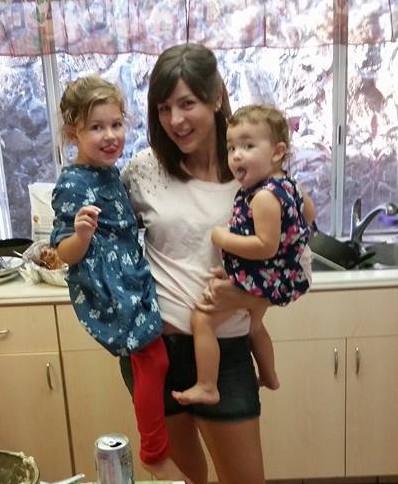
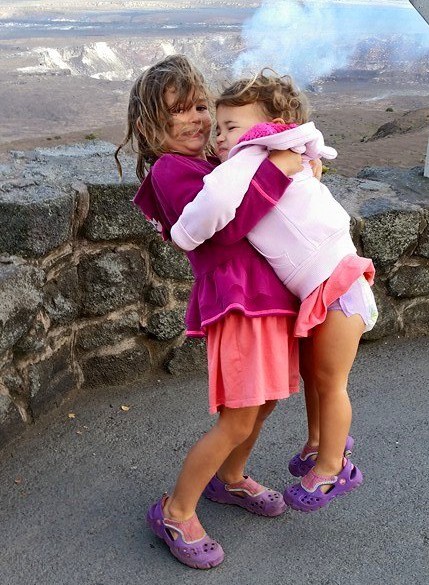
Some of my favorite tiny humans

Lord help us all if one child got more pieces of candy than the others. For my parents, I’m sure managing “justice” was a full-time job. We were extremely vocal is there was even a hint of unfairness in the distribution of sweet goods.

So for parents to think about stepping in the world of social justice can seem daunting. Managing the demands and schedules of tiny humans who at times believe the world revolves completely around them and their Fisher Price toys is a very demanding task.

However.

It is possible.

It is possible to do justice,

to love kindness,

and to walk humbly with your God.

It is possible to raise a generation that is aware of children, women and men that are enslaved in sexual exploitation.

It is possible to create a force of world changers who don’t just care, but also act.

group

Example of an awesome mom juggling tiny humans! Shout-out to my sister-in-law Kristin

And this doesn’t happen on accident.

This is a word for moms. The mom that can’t imagine adding one more thing to her plate. The mom who can hardly get her child to share her Barbies with the neighbors. The mom who is overwhelmed with getting from one meal and one nap to the next.

Your life and your role is unspeakably important.

And I’d like to introduce a grain of thought that you can live for justice actively with your kids.

But it may look different from the way I live. In fact, it will look different from mine. I’m in a totally different season of life. Your ways will look different, but your impact will also be different, and perhaps greater. In having children, your impact opportunity is exponential. Think of that! It’s not all about how much you accomplish; it’s about multiplying your compassion many times over in your children’s lives.

That’s the kind of math we need in this world.

Moms (and Dads, of course), here’s some things to think about as you approach living an active life seeking justice in your community.

You are not separate from your family.

Whatever you choose to do, do it with your family, with your children. Teach your children about these realities. Don’t hide the realities of human trafficking from them.

Research child trafficking. Read. Watch. Become aware.

Become aware of the realities of child trafficking and prostitution in America and in your very city.

Missing child or runaway report? That child will most likely end up in child prostitution or some form of sexual exploitation.

Foster care and social services? Most of them have gone through some sort of trauma, many of them from sexual and/or physical abuse and are at risk to traffickers and pimps.

As a mother, as a parent, you will have an understanding and anger inside of you that is more direct and empathizing than those without children.

But don’t pursue this out of guilt or revenge; pursue it because you know love and justice are two sides of the same coin.

Allow your heart to melt. Your actions will naturally follow as an overflow of your heart.

And then share with your children. Appropriately, of course, but you can be a good judge of how much they can process at what age.

But whatever you do, don’t hide them from it. Because otherwise we will one day have a generation of sincerely ignorant and insensitive adults who turn their gaze away from really uncomfortable realities that they could actually have an impact in.

Ask your kids what they think you as a family should do to help.

You may be surprised at the amount of creativity and generosity that your kids have. Why not ask and see what they come up with?

This is also about empowerment. If someone feels like they are contributing to a solution, then they will begin to own it for themselves.

Release control of your “perfect house.” Bring broken people in to mess up your perfection.

I’ve noticed an interesting culture of the “perfect-organic-range-free-germ-free home.” The kids can only eat perfectly wholesome food, this is where everything “goes,” schedules cannot be tampered with, and life in general revolves around the total interests of the kids.

And believe me, I know kids thrive and grow under healthy, consistent structure. And, please, someone give them regular naps!

But still, I think there needs to be a safe place where imperfect people can walk in as imperfect and feel accepted.

What if someone “dirty” comes into your home? Will your kids (or you) reject them because they don’t fit into the system?

What if you had a schedule that showed your kids that helping others is more important than playing video games?

What if it was all about “This is simply how we live as a family” instead of “Geez, this is another thing we have to add on top of our already crazy schedule?

For instance…

Our whole family participates in yearly 5k’s to raise awareness about human trafficking.

We go to a local orphanage every Tuesday at 4:00pm and give them cookies we made.

We bring a few kids over from local social services once a week for family game night in our living room.

Every time we give our children allowance, we require that they give 10% of it to raise money to the local safe house for formerly-trafficked girls.

A few more ideas come to mind…

Choose a country that is under the blight of poverty, violence and trafficking. Pray once a week as a family for that country and do research so you can talk about it with knowledge and understanding.

Find an organization that is doing sustainable work in that country, build a relationship, get real names to pray for, and send handmade notes and cards to the ones in the recovery shelters.

Save up and take a vacation as a family to that place as a missions trip.

Overall, it’s about being intentional, being purposeful with your life.

Don’t let life control your life. Teach by example that we can make decisions about what our life practically looks like. We’re not victims of our circumstances or appointments.

If it’s simply a part of your life and values, then you don’t have to worry about “not doing enough” or having to carve out extra time.

But remember, at the end of the day, you are raising a generation of world changers…

So don’t discount the impact you are making to the world by simply being a faithful mom.

We become what we look at. So if your children are spending 18 years of their lives watching your virtues of faithfulness, love, justice, kindness, and generosity, will they not become that themselves?

Start with who you are. Take care of you. Take inventory of your soul.

And then live out loud.

I can’t think of a better way to be a mom of justice than that.

*****

Want to learn about human trafficking and exploitation in America and the world? These are my personal resources.

Here are some the most helpful organizations that I follow on Facebook and use for learning:

Not For Sale

Exodus Cry

International Justice Mission

A21 Campaign

The Abolitionist Movement

Here are organizations that sell really beautiful products that are either made by survivors of trafficking or support them:

WAR Chest Boutique– International free-trade products made by women survivors of trafficking

Bought Beautifully– International free-trade products that support survivors of exploitation

Starfish Project– fair-trade jewelry that employs previously trafficked women in Asia

Colette Sol USA– handmade women’s shoes to fight human trafficking

Cozzee– fair-trade coffee supporting survivors of trafficking

Conferences you seriously need to check out or see if you can stream:

The Justice Conference– Chicago, IL

Abolition Summit– Kansas City, MO

Global Prayer Gathering– Washington, D.C.

Books that have impacted my life and moved me to action:

God in a Brothel– by Daniel Walker. Stories of an undercover investigator’s experiences in saving women and children from sex trafficking around the world.

Possible by Stephan Bauman. A call to reconsider what it means to sustainably impact our neighborhoods, villages, and cities.

Amazing Grace by Eric Metaxas. The story of the remarkable life of the British abolitionist William Wilberforce.

Films that nailed it in showing the realities of trafficking:

Nefarious: Merchant of Souls– award winning documentary on the global sex trade

Demand– documentary that is produced by Shared Hope International and focuses on demand factors for sex trafficking

Dispatches from the Front: Islands on the Edge– documentary highlighting the realities of human trafficking in Southeast Asia

An Open Letter Of Apology To Black America

Dear Black America,

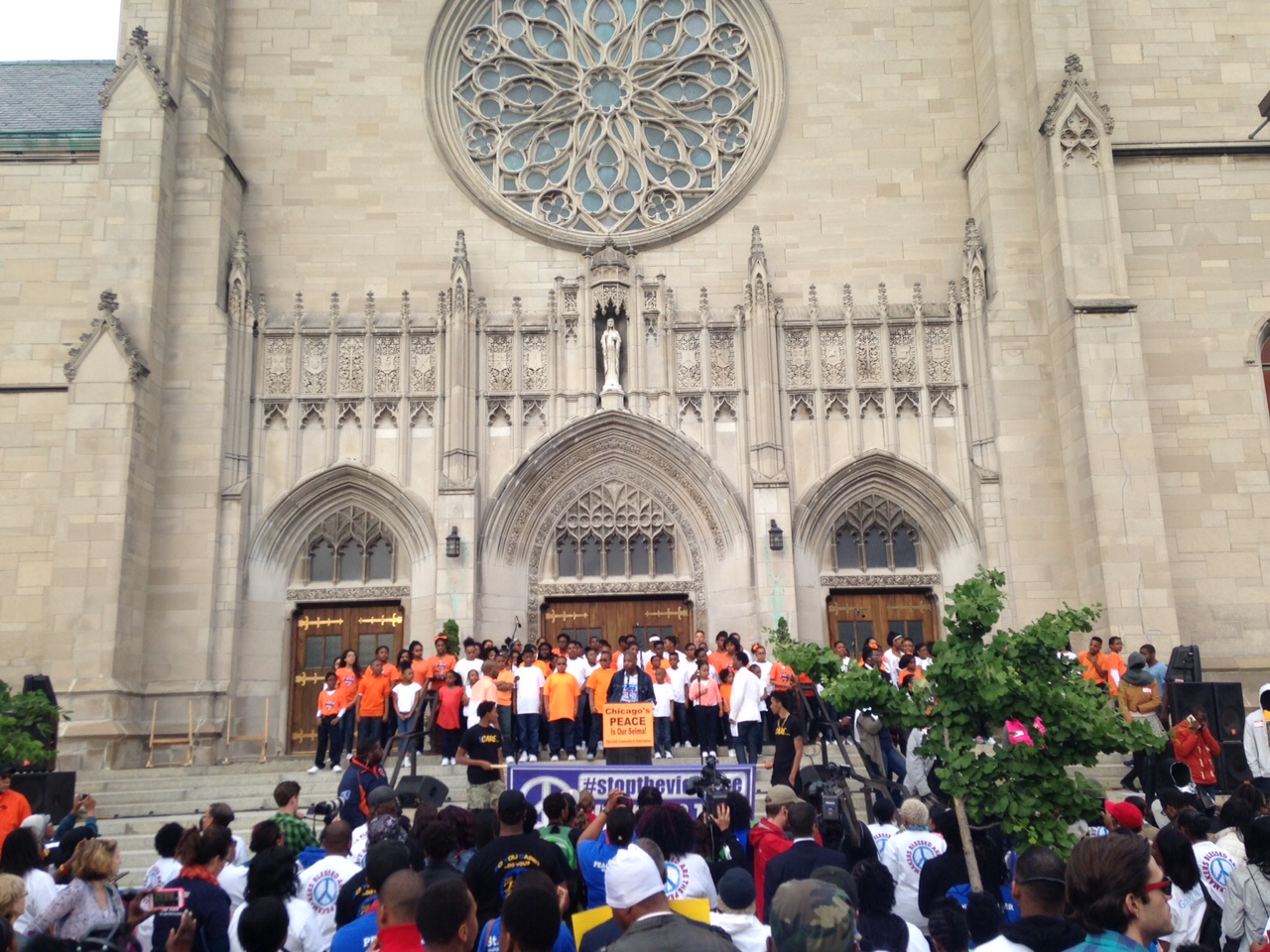
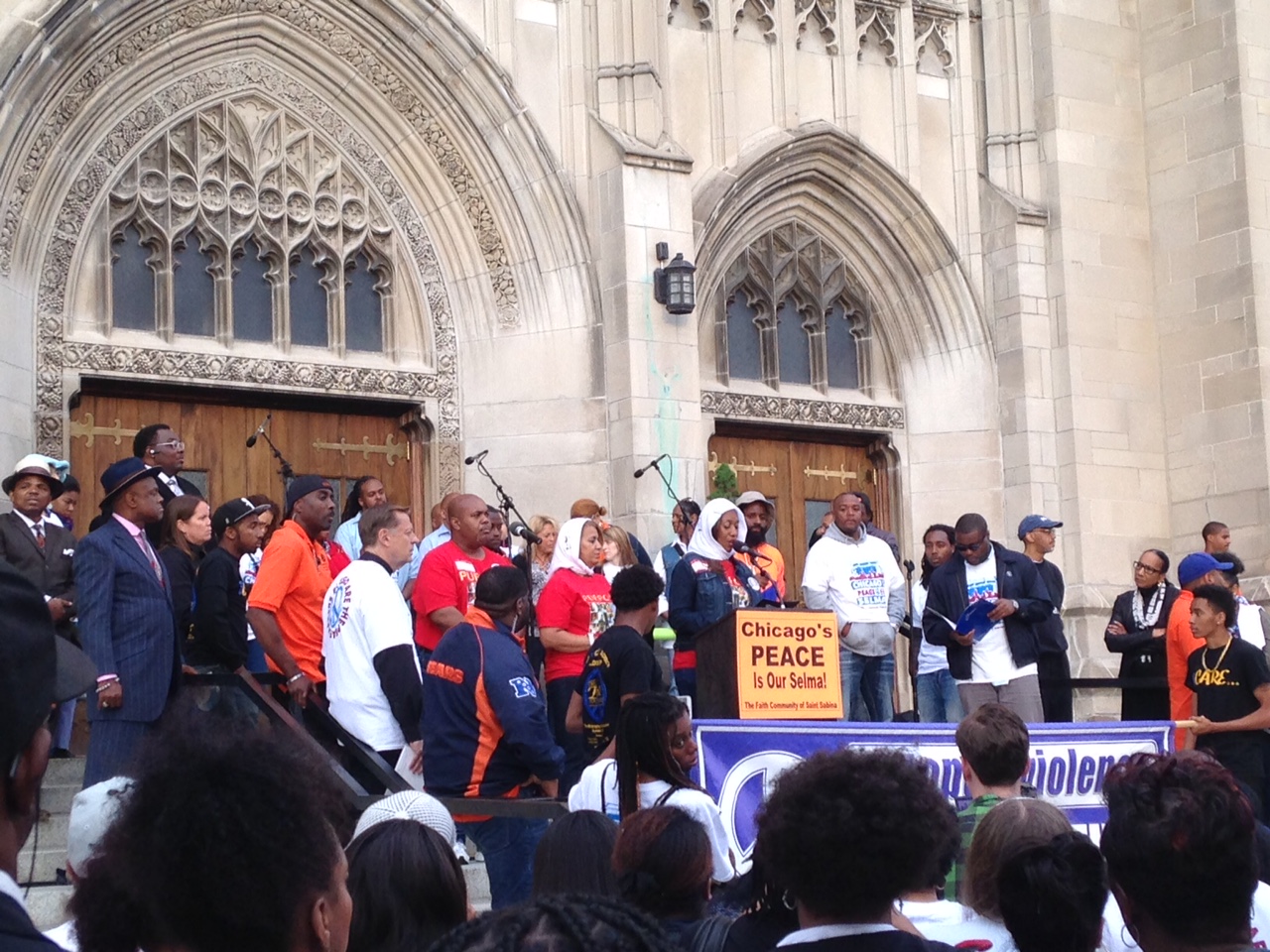
IMG_8300One week ago I had already decided to go to South Side Chicago on Friday night and attend the Peace Rally and March at St. Sabina Church, as well as attending Progressive Baptist Church, a historical black church in south Chicago, the following Sunday morning. Little did I know that the massacre in Charleston South Carolina would set the stage for me as I would awaken into a new reality and inner brokenness.

For myself, I was born in Joliet, a suburb of Chicago, yet moved to several different states with my family. Many of these places had opportunities of diversity: Virginia, St. Louis, and Orlando, to name a few. I also lived almost 9 years in South Carolina before moving to Chicago exactly a year ago.

I know Charleston very well. It was one of my favorite cities. I knew it so well that I would often act as tour guide when I took my friends there.

Yet at the same time, I didn’t know– didn’t know the hate.

But even so, as I’ve come to realize…

I could have known.

I just didn’t think it was as important as my comfort.

At the Peace Rally Friday night I entered into a world that was far from my own, but ironically only next door. A door I and many others in white America have never walked through, but had access to.

I saw a loving, heart-full people that are literally dying for peace.

They read the names of 100 Chicago youth who have been killed during the last school year. They had 23-year old guys talk about their lives being changed from guns and violence to faith and freedom, but also the realities that many of their friends were now dead or in prison. They talked of doing everything they could to make their neighborhood a safe place for their children to play.

IMG_8306When asked for a show of hands of how many people have had a loved one killed as a result of violence, I looked around and saw most people in the large crowd raising their hands.

But not me.

I didn’t live in that life. Sure, I was born just a city away, in a town that had the 2nd highest crime rate in America while I was growing up. But I didn’t know anyone injured or killed through violence.

“How did that happen?” I wondered.

One older black man put his hand on my shoulder during the march and said, “I’m glad you came.” We talked. We held hands and prayed. And afterwards we all hugged everyone else around us and verbally affirmed, “I love you.”

IMG_8310In the face of terrible violence and poverty in their neighborhood, this was their expression.

Love was their rally cry.

My white friends, or privileged class, never rallied like this together to overcome impossible odds.

We never had to be uncomfortable like this.

We never had to be strong like this.

Another man struck up a conversation with me and joked about how hot it was in the unusually chilly 50 degree summer evening. I laughed back, “This is hot?? I know heat. I just moved here recently from South Carolina…”

And I nearly choked. I almost apologized, “And– and I’m sorry. I’m so sorry.”

And that almost-apology hasn’t left me.

Look at us. We are all applauding the open, public demonstration of forgiveness from the families of the Charleston massacre towards Dylann.

“How strong. How forgiving. How beautiful,” we admire.

We’re so happy to see a spirit of forgiveness in a racist situation.

God help us.

We are so blind.

We should not be expecting your forgiveness to offenders.

We should be asking for yours.

Where were we when your families were bought and sold like cattle? Where were we when your basic human rights were intentionally denied? Where were we in 1822 when multiple church leaders of Emanuel Methodist Episcopal Church were executed by the governing authorities? Where were we when our politicians and businesses and families decided that you were less than worthy of the kind of life we lived? Where were we during Selma and L.A. and Baltimore and Ferguson?

Where were we?

Sitting on our privileges, that we knew wouldn’t change whether we acted or not.

You have never had that luxury.

As a young white educated privileged American, on the behalf of those like me who have lived a brutally insensitive life,

I am so sorry.

Like Nehemiah when he learned of the corrupt deeds of his people and nation and came to God and said, “We have sinned against you,” even so I now realize that the sin of Dylann is the reflection of a culture that turns a blind eye to racial hate and next-door poverty. The weight of the harm is heavy. My heart is broken. I am hurting to reconcile.

His sin is our sin.

Is my sin.

And so, I’m sorry.

I’m sorry for not listening.

I’m sorry for claiming the colorblind Gospel of Jesus but not seeking community in faith with you.

I’m sorry thinking that I wasn’t prejudice because I had several token black friends.

I’m sorry for not laying down my rights so that I could advance yours.

I’m sorry for not being a voice for your injustices to the ones in power that I had access to.

I’m sorry for being afraid of what other people would think of me.

I’m sorry that we avoid poverty and violence like the plague, that we warn each other about going to the South Side, or the West Side, or whatever side of the city is the impoverished side, thinking that somehow it would make us dirty.

I’m sorry for discriminating, for judging you by what you say or what you wear or how you look or what music you listen to or how you live because it looks different from me.

I’m sorry for using my privileges to make myself more privileged.

I’m sorry that we viewed Ferguson and Baltimore as a boy crying wolf, and that it took 9 innocent black lives being murdered to realize that there is a race problem, and that it is black and white.

I’m sorry that it’s taken an event like this to make us care about you, that makes us come together and unify.

I’m sorry for arrogantly saying things like, “The Civil War is over. Slavery is in the past. Get over it.”

I’m sorry for dismissing our nation’s historical past acceptance of slavery as “It was just the culture then,” instead of saying, “It was an evil culture.”

I’m sorry that when you reached out to us in your most desperate hour that we said, “Keep calm and carry on” when there was in fact everything to be enraged about.

I’m sorry for my brutal insensitivity.

I’m sorry for avoiding you.

I’m sorry for Facebook posts and tweets and conversations that made assumptions without having actual real relationships and experiences with you.

I’m sorry that our public, private and Christian educators don’t talk about civil rights or the civil rights movement as something that is important to our culture and identity as a nation.

I’m sorry for South Carolina specifically, that we could produce a generation of activists against blacks, that it did not happen on accident and was bred with a twisted value system that of course nobody claims but doesn’t really question.

I’m sorry that our churches use the words, “Us” and “Them” and not “We.”

I’m sorry that our churches don’t actively seek reconciliation with you.

I’m sorry that I have waited for you to come to me first.

I’m sorry that I would weep about the vast need of the unreached nations and how I wished I could go, but then the next moment watch the news get annoyed about another black protest to violence.

I’m sorry for our white flight and shamelessly running in retreat from the inner cities.

I’m sorry that our churches would bring in organizations to fight poverty in West Africa but never went to the “bad” impoverished parts of town to feed the hungry children.

I’m sorry for the death of your children, your fathers, your mothers, and your friends through violence that could have been prevented.

I’m sorry for those nights you sobbed yourself to sleep, wishing someone would believe you, praying that someone in a place of power would fight for your cause, but we saw it and ignored.

I’m sorry for being part of the reason for many days and nights of rejection and hopeless feelings.

I’m sorry for the name calling we have done, denigrating your value.

I’m sorry that this has gone on for generations.

I’m sorry for assuming everything was a political move.

I’m sorry for my injustice against you.

I’m sorry for my faith without works.

I’m sorry for thinking of myself more highly than I ought to think.

Before everyone I want to make a stand and declare that you are valuable, you are beautiful, your spirit is strong, your voice is heard, your cause is real, your mission is just, your people are our people, your dreams are our dreams, your struggle is our struggle, and your victories are our victories.

Since I was silent, ignorant and insensitive for so long, I want to honor you and humble myself by making this public.

Will you forgive me?

**************************************

This is very personal to me. It’s an overflow of my heart that somehow made it’s way to an open letter and blog post. You may understand me, but you also may not. That’s ok, because it’s been a long process for me. However, if this is your confession and you want to express your sorrow over any of our ignorance and insensitivity, please leave a comment and then share. Let’s do this together and take a real step towards reconciliation with our brothers and sisters.

#letsreconcile

**Read more about our country’s historical injustice in an article by Lecrae