What I Learned From An Ex-Pimp’s Story And How It Relates To The Riots

There’s a soul behind the face.

There’s a heart behind the actions.

There’s a story behind the violence.

I had a major realization a few weeks ago while watching a documentary about sex trafficking in Chicago. The statistics were mind-blowing. I have learned a lot about trafficking, prostitution, and the sex trade in the past few years, but I had no idea how pervasive it was amongst the youth, specifically in Chicago.

childThat the average entry age for prostitution (i.e., trafficking) is 12.

That the average age for boys to start buying sex is 14.

That mothers sell their daughters to drug dealers to pay off debts.

It starts making you really angry at the money-handlers, the dealers.

The pimps.

Behind the face of every child and women trafficked is a pimp that is controlling and dictating every move and action.

The pimps are typically men that are extremely manipulative, controlling, narcissistic, abusive, and greedy. His women are his property, his means of support.

What’s equally mind-blowing is when a pimp leaves that life and is truly a changed person. It’s radical and can be sometimes hard to process. Such an evil person now changed? It’s only possible through life-changing redemption.

Very few pimps leave that life, but I came to hear the story of one.

In a documentary called “Dreamcatchers,” I heard the story of Brenda. She is from South side Chicago and lived in prostitution and trafficking for 25 years. After escaping from that world, she dedicated her life to helping youth and women ensnared in the same world she had been.

In the middle of the film entered a new character, Homer.

Homer, now an ex-pimp, had been the best friend of Brenda’s former pimp. Homer controlled, abused, and sold women just like the rest.

Years later, he changed. Radically. He left behind everything and became an advocate against the street life he used to live, now championing women and the cause of anti-trafficking.

But it wasn’t the incredible life change that grabbed my attention the most.

It was his story, his past.

Homer grew up with a terrible family life. He watched his mother be physically abused by his dad. He knew growing up that this probably wasn’t right, but because his mother never left, he began to believe that this was the way to love. So it was at home that his world-view of people and women evolved.

His dad was always a very angry, resentful man. His dad, now elderly, was actually in the documentary. He was talking with Homer in their home, and his dull, seething anger was incredibly obvious. You could see the dysfunctional home life in real time, though years later.

As Homer talked in an interview later, he described how his father’s anger and home life directly influenced his own life. Homer succumbed to anger and hatred as he himself was physically and sexually abused as a child by people in his life.

With this skewed world-view and mental disorientation, he ran headlong into drugs, alcohol, and sex. It moved naturally into violence, theft, and using prostitutes. As he observed the “benefits” of pimp life, he went full throttle. Women ceased to be people. They were now objects, his property.

Did he ever think that he would be a pimp? “No,” he said. But it was a path, a road that the culture around him gave as an opportunity to find his identity.

But the most telling point of all of this was when the interviewer asked him why he thought his father was so angry and abusive. “Well,” Homer replied, “My father’s father treated him the exact same way.

“I knew my grandfather briefly. He grew up in Alabama and later moved to Chicago. And he was seriously full of anger and wrath. He took it out on his family and was abusive.

“In fact, I believe that if my grandfather had the same opportunity as I did with violence, drugs and pimping, he would have done the same things. He would have been a pimp. He would have been violent in community. I know he would have.”

When I heard this, my mind just froze.

Something clicked. Something I didn’t even wanted to think about or consider.

Perhaps you can’t separate history from hurt.

Perhaps the sins of your fathers could be your sins.

Perhaps…

Perhaps there’s a historical root cause behind all the displays of anger, hatred, abuse, and violence.

Maybe the best way to help Chicago’s violence and trafficking issue dissolve is to help individual people be set free from their anger, which stemmed from pain, which stemmed from a deep wound…

…which may have been injustice.

I believe this ties in directly to all the talk and conversations around race and riots and protests that is getting media attention right now.

And I feel like something needs to be said.

White friends, here’s a word for us: we vastly misunderstand the struggle.

We think, though may not say, that the most violent parts of our cities are where the population is heavily black or minority, so they are the cause of it. It’s just their nature.

And if it’s just their nature, then the solution doesn’t involve our empathy. So we don’t have to feel sorrowful– simply offer pat solutions that gives us the sense we’re involved without actually struggling through the emotional issues with them.

And we act on it.

Sure, maybe not outrightly. That would be hypocritical to our loving, accepting, and religious culture.

But our lives speak louder than words.

Our friends aren’t black (Don’t agree? Scroll through your Facebook friend list right now)

Our churches aren’t diverse (Should not my church reflect the racial percentage of my city or community? Or at least talk about pursuing that?)

Our businesses don’t want to sell to blacks (What I learned from conversations at one of my jobs)

We (might) invite black friends to come into our world instead of us going into theirs.

We make light jokes about, “The war is over. Slavery has been illegal for a long time. That was resolved years ago. You should be over it by now.”

And by say that we’re basically saying, “I don’t care what you feel. You should not feel that. Since I think you should be over it by now, then I don’t have to care about your struggle with it.”

Wait a second, Angela,” you may interject. “You’re saying that the black culture is still hurting from the slavery that was ended after the Civil War way back in 1865?? C’mon…”

I’m saying that I realized that Homer’s great-great-grandfather could have been alive around the time of the Civil War. And the way he could have been unjustly mistreated may have been the seed of anger that grew into abuse. And abuse is proven to pass from generation to generation. Just like it has in Homer’s family.

Yes, I am drawing conclusions and making some assumptions and trying my hardest to understand people’s actions based off their past. And it seems logical, that part of the issue of trafficking I see in Chicago is stemmed from a dysfunctional family life.

Does that give excuses to those that come from dysfunctional families? NEVER! I would never look at the women that Homer prostituted and say, “Well, he was simply a result of his family’s anger which was incited by injustice several generations ago. He shouldn’t be held liable.”

Obviously not. I think you and I both get that.

But I think we need to think a little more before we post and blog and discuss. I think we need to work hard to be intentional about how we diversify our minds, and then our speech, and then our actions.

Guys, it’s really uncomfortable. But get over it. Living this way is meaningful and may not just change you; it could change your community and our entire national culture.

I don’t have any to-do lists for you or how I plan to solve these problems, both of the white misunderstandings or the black realities. I’ve probably offended someone on both sides by making some generalizations.

Yet I believe that dysfunctional can become functional and it can happen in a kind process. Wouldn’t it be great to have someone walk with you through your struggle and say, “I hear for you, I want the best for you, and I empathize with your pain, even if I don’t totally understand it.”

And don’t think I’m really good at this. Do I struggle with discrimination? Have I discriminated before? You bet.

But I’m becoming more aware. More aware of myself, more aware of the struggle, more aware of the past. And being aware makes me fight against my tendencies to only be around people who are just like me and make me feel really comfortable and good about myself.

I think we all need to hear this and ask ourselves the question,

“Am I the one that needs to change?”
 

Honest Confessions About Being Poor

Let’s have a chat, middle-class America.

Being poor is rough. Wondering how you’re going to pay the bills is the least-fun experience ever. Going through a season of uncertainty is tiring with all the anxiety and stress that wages war on your mind.

But you know what we hate more than being broke?

Being needy.

It’s okay to sometimes admit being “middle-class” and not being able to afford “luxuries.”

But being needy? Asking for help? Receiving help?

That’s out of the question.

Because then I’d have to admit I’m not self-sufficient. Run the risk of being thought of as a failure, that maybe I’m a fully-functioning adult who can’t even afford to pay the bills, much less go out and spend time with friends and community.

So what do we do? We don’t ask for help. Yet at the same time we don’t ever say “no.”

How does this pan out in our lives? Here’s where I think this death-trap leads:

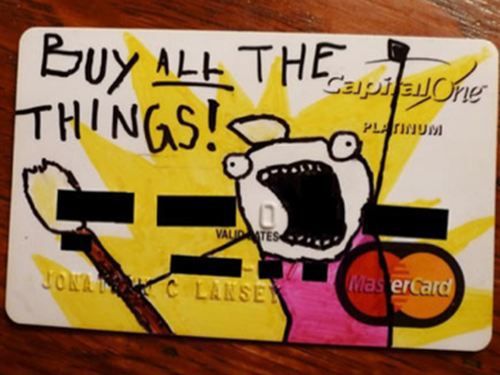
Credit cardWe find another un-related party to pay for us. 

Why are credit cards and loans and payment plans so attractive? We are able to receive help from someone who doesn’t know us and is completely removed from our lives. We’re able to keep up the appearance and expectation of the life we want to live in front of the people we want to be respected by.

Virtual financial help gives us a false sense of security. I’ve never heard a person stand up in a community gathering or Wednesday night prayer service and vulnerably say, “I don’t know if I can afford gas to make it until my next paycheck.” But that same person might go to a gas company and apply for a rewards credit card.

Better than admit I can’t make it on my own.

When we find our own “resources” instead of helping each other, then we become too good to receive help and further ingrain this shame culture, that somehow I’m not valuable if I can’t live the life I think I’m supposed to live.

And feeling shamed leads to the next point:

We isolate ourselves from others.

If I can’t keep up, if I can’t afford to eat at the places everyone else eats at, if I can’t have a home that I expect to have in order to invite people over, then I might as well not spend time with people at all.

I know. I’m with you. I get it, people.

This has been hands-down the most difficult year in my life. Financially, it’s seemed near crushing at times. And I’m like, “Geez, when will this ever end?!”

And in those dark hours I had to face my fears.

“Face your fears” is such a cliche phrase and I’ve wondered if it actually meant anything.

Now I know it means that these fears lurk in the deep recesses of your heart, and you kinda know they’re there, but you work hard to keep ahead so that you never have to face them and admit you have weaknesses.

Until everything is taken away.

And then you realize that stripped down you are a whole lot more unstable than you ever thought.

When everything was gone, when last summer I lost all my work and a job offer in a single moment, I was frightened beyond anything I could imagine.

In that moment and the days to follow, I made the difficult decision to work through it instead of finding a quick healing balm to surpress the pain. Credit cards and bank loans are easy compared to reading your own Fear statement.

Now before you think about how epically brave this was, keep reading.

Though I found I was fine with not having much, I quickly discovered another issue.

The Real Fear.

Here it is.

I didn’t want to be needy.

I was fine with living simply. I just didn’t want to lose control.

And now the control was gone. I couldn’t hide any longer. And even if I tried, it wouldn’t have worked very long because the situation didn’t really change and hasn’t really yet.

So here I am, thinking now that maybe I’m supposed to learn something from this instead of just fixing the problem. Maybe I’m supposed to change. Maybe these things make you stronger because you have to accept your weaknesses in order to be stronger. Weird how that work, huh?

So thus the epiphany moment. And as I’ve been thinking big picture about this now, here’s some positive things I’ve learned this year about being broke.

Your pride barrier is lowered, thus you become more humble.

There’s nothing more humbling than being broke, because then you realize that maybe my world doesn’t revolve around me and my bank account. Maybe I’m not defined by my income.

When you become more humble, you are more relatable and empathetic. 

Humility pushes you to see the world through other people’s eyes. If you can do that, if you become a truly empathetic individual, then you have huge capacity to relate in relationships, which makes you a better person and contributor to your community.

When you don’t have much, you are free, thus you have power. 

When we give our lives over to “getting,” getting a car, getting more furniture, getting a bigger house, getting a bigger paycheck, then you also get slavery. It’s sad to see so many people that are owned by possessions.

When you don’t have much? Then you’re free. Free to give the power to things that last for a lifetime and eternity.

If you owe, you don’t have power. Someone else does. 

The moment you let someone else pay for you, you have removed power from yourself and given it to another. Isn’t crazy how we choose to give power to credit companies who could care less about us? If you must borrow, then at least borrow from someone who cares about you.

Having little is the garden that creativity and innovation grows in. 

Have you seen someone with loads of money and options? They typically aren’t very creative. Other people think for them because they don’t have to think. They have money now.

Sometimes we exchange power in thought for power in money. That’s a dire mistake.

Being poor is a mindset. 

You can choose to focus all your attention inwardly and be consumed with your lack of resources and how that affects your life.

OR you can choose to accept where your current situation, and then focus your attention outward to the opportunity you have through your current situation.

I may have next to nothing, but I am wealthy in every way. Because I’ve learned to measure wealth in character, in love, in relationships.

Never let anyone tell you you’re less than your wealth in character, love and relationships, that somehow you are defined by your money, possessions, lifestyle, restaurant choice, education, or job.

Because they are the poor ones. And they will never know the riches that are experienced in the things in life that don’t have price tags on it.

#anotherwaytobelikeJesus

Just had a personal conversation with myself. Whatever it’s worth, I hope you see the Gospel and not me cause I can’t come up with thoughts about and love for Jesus on my own. Totally not my default

 ******

So let’s revisit that tweet from a few weeks ago:

Broke. Jobless. Homeless. Single. #anotherwaytobelikeJesus

But am I limiting how my life can ”be like Jesus?” What if in 5, 10, even 30 years I tweet “Rich. Dream job. Beautiful home. Married with children”, could my hashtag still be #anotherwaytobelikeJesus ?

Yes. Because it was never about those things in the first place.

“I know how to be brought low and how to abound. In any and every circumstance, I have learned the secret of facing plenty and hunger, abundance and need.” Phil 4:12

Why do you focus so much on the objects or circumstances to determine God’s character or affection for you? He said, “I AM” and that is enough. He overwhelms me in love because that’s just who He is. So in the moments of overwhelming financial pressures, I am overwhelmed by God’s love in blessing me. In the moments of overwhelming financial provision, I am overwhelmed by God’s love in blessing me.

During graduation there were many testimonies given that had a common thread. Over and over I heard testimonies like this: “I didn’t know how I’d make it through school, but God abundantly blessed me and I am now graduating debt free.” “I want to thank God for blessing me with money to come back each semester.” “I struggled each semester getting money to pay my bill, and now that I’m graduating I have to future bills to pay. God is so good.

Though I didn’t get to share a testimony, I was tempted to go up to the microphone as I walked past and say, “I just want to thank God for allowing me to graduate with thousands of dollars in debt because it’s just another opportunity to grow in faith and love for Him as I sweat for years to come to pay it off. This is how he will make His name and Gospel famous in my life.”

ALL things are blessings from God. If I start thinking otherwise, like in blessings verses non-blessings, then I get into this weighted balance system where I’m weighing the differences of blessings and non-blessings in my life and hoping that God gives me more blessings so that I’ll be happy and joyful and so that I can bless God openly more because I have more blessings than non-blessings, because who would actually believe that non-blessings are worth praising God about. Yet I fall into this “money trap” so often; I mean, my praise to God before others reflect that. When did God giving me money equate with his goodness? Is life really about money? Is God really all about money? Isn’t God really all about Himself? His glory? His Kingdom?

You’ve have missed the point! It’s about God! It’s about the Gospel! Stop rating your life on balanced scales and go to the cross. “When they measure themselves by one another and compare themselves with one another, they are without understanding.” II Cor 10:12. If God gives me money, I don’t thank God for money; I thank God for God. If God takes away money, I don’t plead to God for money; I plead to God for God.

And just because I have next to nothing as far as earthly possessions does not mean that I’m able be more like Jesus than the one that has an abundance of possessions.  And the same vice versa. Which, by the way, leads into why the Body of Christ is so important. All other Christians have been given different gifts, connections, resources, and realms of influence. You cannot further the Gospel on our own. In Christ, you link arms with other Christians and work together to make God’s name famous to the world. “…so that through the Church the manifold wisdom of God might now be made known…”(Eph 3:10) Set aside labels, set aside comfort zones, get over your reputation (you’re not that important anyway), and focus on the Gospel. Know it, study it, fall in love with it.

Want to waste your life? Keep thinking about it, analyzing it, planning, figuring it out, because by the time you’re where you think it should be “all-together,” you will probably have just missed out and wasted it all. You are not God—quit acting like it, thinking like it and giving testimonies like it. And if people disagree with you, stop going to books and opinions and twitter. Go to the Gospel. Have an answer that points back to the Gospel.

Which reminds me—you seem to have issues and slight differentiations on the views of others, especially Christians. Yes, it’s good to think critically and to understand what you believe. But what’s the use of focusing on that person so much? Again, back to the comparing problem. Look for Jesus in everything, and even if it’s just a hint, thank God that the Gospel is present in that person’s life and see how you both can take a step together towards loving God more. And if there is sin or wrong motives, why does it make you so angry? Seems I’ve read a similar story in John 8—yep, the Pharisees were pretty ticked at a woman’s immoral sin. Self-righteousness. That’s what makes me annoyed with others and their “wrong representation.” Humility would see myself as a much worse sinner than they and approach them in humility, speaking words of truth yet grace. Yeah, I can’t do that- but in Christ I can.

I’m glad for time to think through these things. I think often Satan wants me to be so busy that I don’t have time, energy or alertness to listen to the Spirit’s voice. Striving in tasks but not loving the Savior makes for a miserable life.

Jesus, I thank you for all things. They are all blessings. All things do work together for good, and that good is that I would be conformed to your image, not that I’d have material or circumstantial benefits. Change my thinking and my whole system of life. Thank you that where I am now is the best way that I can look like Jesus. And as my circumstances and stage of life change, may my constant hashtag be #anotherwaytobelikeJesus